There was a time when war stayed on the battlefield. Missiles flew. Tanks rolled. Diplomats argued on television.
Companies watched from the sidelines. Today, that line is fading. Modern conflict does not always arrive with aircraft or artillery. Sometimes it arrives as a PowerShell script at 2:17 a.m., quietly asking your network a few uncomfortable questions.
The recent cyberattack claimed against Stryker Corporation is a reminder of that shift. The group calling itself Handala publicly claimed responsibility for a destructive cyber operation targeting the company’s internal systems.
But when an incident like this appears, the most important question is rarely what happened. The real question is what it means.
And to answer that, we need to look at the actor behind the noise.
Threat Actor Profile
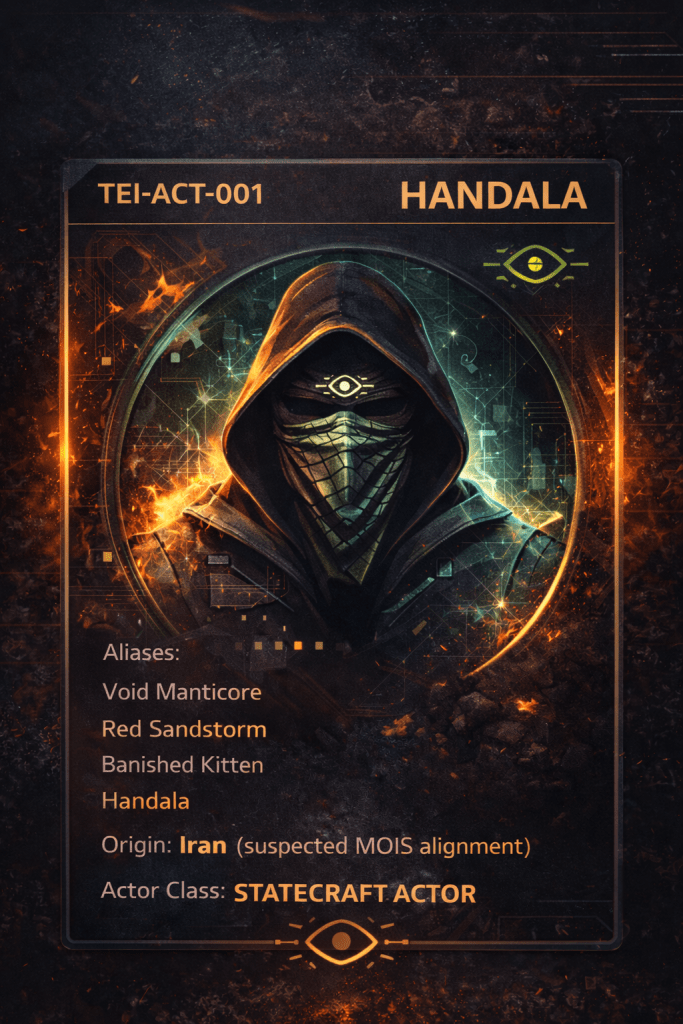
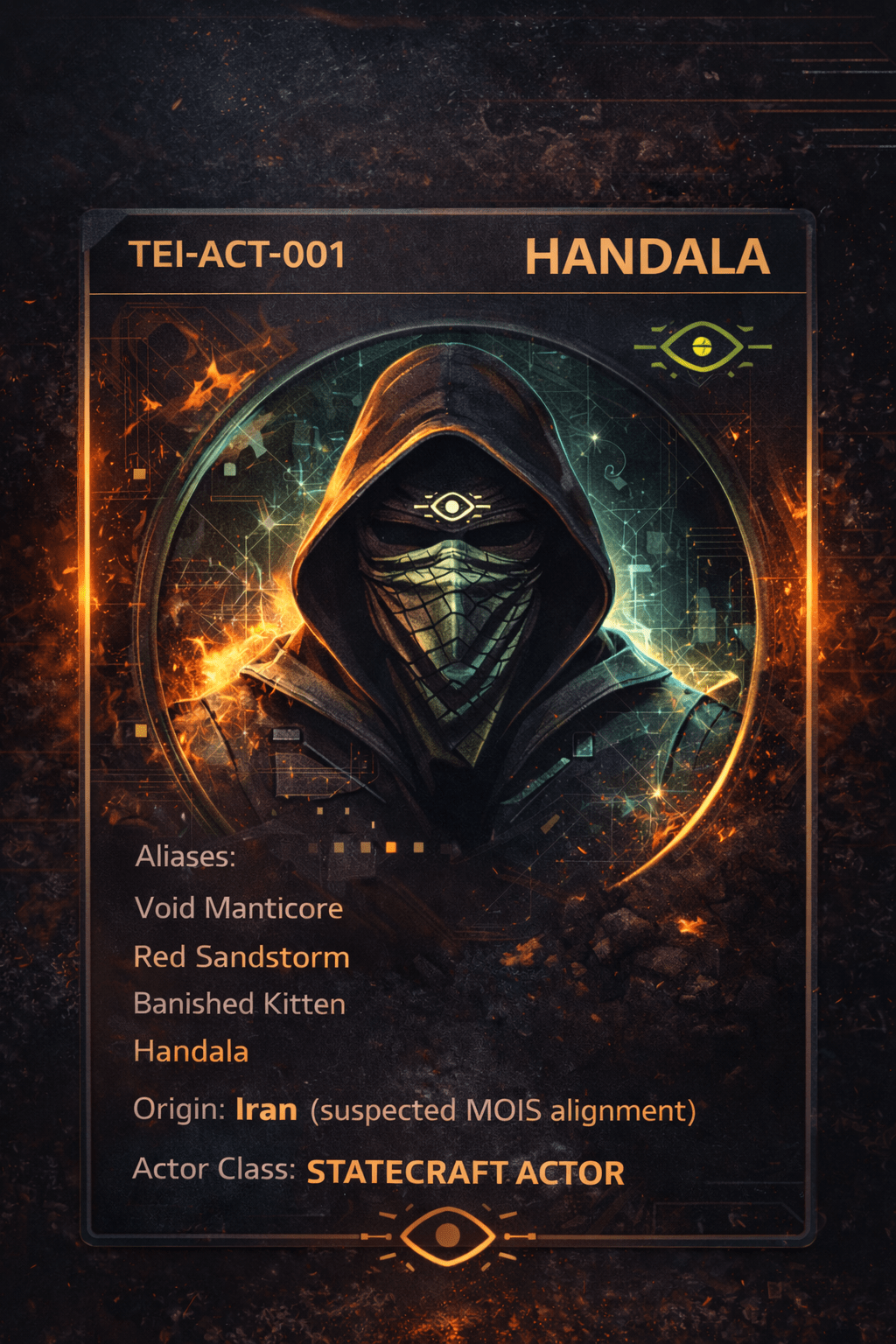
Handala is not simply a hacktivist group shouting into the void. Security research suggests the persona is connected to an Iranian threat cluster known as Void Manticore, also tracked by various researchers under aliases such as Red Sandstorm and Banished Kitten.
In my own tracking under ThirdEye Intel, this actor cluster is catalogued as TEI-ACT-001, classified as a STATECRAFT ACTOR. In other words, a cyber operation aligned with geopolitical objectives rather than financial gain.
The persona itself first appeared publicly around July 2023, initially targeting Israeli organisations before expanding activity towards Western and international targets.
That expansion is what makes the Stryker incident particularly interesting. Because it suggests something larger than a single intrusion. And when things start to look bigger than they appear, it helps to zoom out.
When the Battlefield Movies Online
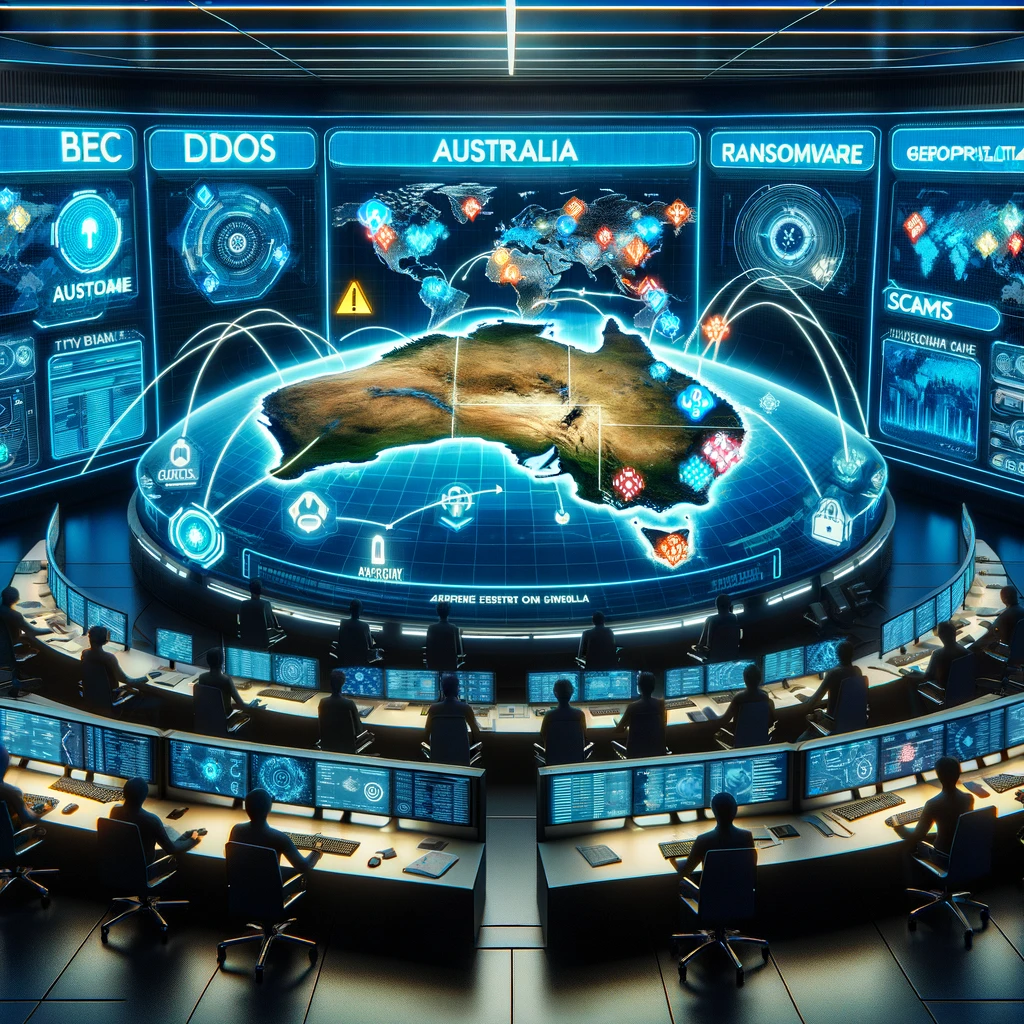
Geopolitical conflicts rarely stay confined to geography anymore. They spill into supply chains. Into social media narratives. And increasingly, into corporate infrastructure. One minute your company is shipping medical equipment, next minute it is accidentally participating in international cyber diplomacy.
Actors aligned with nation states are no longer limiting themselves to government targets. Hospitals, logistics providers, software companies, and medical technology firms have all become potential stages for geopolitical signalling. The Stryker incident fits into that evolving pattern. The attackers did not appear motivated by ransom. Instead, the operation included claims of device wiping, data exfiltration, and propaganda messaging.
That combination is familiar. It mirrors earlier destructive campaigns like Shamoon and NotPetya, where the real objective was disruption and messaging rather than profit. Which leads to the next logical question.
If cyber operations are now tools of geopolitical influence, how do we analyse them properly?
5W Investigation Approach
Whenever I analyse a cyber incident, I return to a simple framework that has served me well over the years. Not because it is fancy. In fact, the beauty of it is that it is almost annoyingly simple.
5W.
Not the traditional journalist version. A slightly different one.
- What happened
- Why it happened
- Why it happened that way
- Who did it
- What did we do about it
Each question takes us one step deeper into the story behind an attack.
What Happened
In early 2026, the Handala group claimed responsibility for a cyberattack that disrupted internal systems within Stryker Corporation. Reports indicated potential operational disruptions affecting orders and internal infrastructure. The group also claimed large-scale device disabling and data exfiltration.
As with many hack-and-leak campaigns, some of these claims remain difficult to independently verify. But the disruption itself confirms something important. The attackers reached operational systems. And once operations are affected, an incident stops being a purely technical problem. It becomes a business risk event.
Which raises the next question.
Why It Happened
The attackers framed their operation as retaliation linked to geopolitical tensions involving Iran. That framing matters. Because it suggests the objective was not financial. Instead, the operation likely aimed to:
- Demonstrate cyber capability
- Signal retaliation
- Amplify political messaging
In short, the attack may have been designed as a symbolic act of cyber power. But understanding motive alone is not enough. The techniques used also tell a story.
Why It Happened That Way
One of the more interesting aspects of the Handala campaign is not just the disruption itself, but how the disruption may have been achieved. Initial reporting suggested destructive activity affecting large numbers of corporate devices.
However, the evolving picture appears slightly different. Stryker later confirmed that the incident resulted in a global disruption to its Microsoft environment, while noting that there was no evidence of ransomware or traditional malware involved and that recovery efforts were underway.
Some technical reporting has suggested the attackers may have abused legitimate enterprise management tools rather than deploying destructive malware directly. In particular, security researchers have pointed to the possible compromise of Microsoft Intune, a cloud based device management platform capable of issuing remote commands to managed endpoints.
If administrative access to such a platform is obtained, an attacker could theoretically trigger actions across thousands of devices simultaneously, including remote wipes or configuration changes. In other words, attackers may not need sophisticated destructive malware if they can control the same tools administrators use every day.
That shift is important. It suggests modern attacks may increasingly rely on abuse of trusted enterprise systems, where the most powerful weapon is not malware itself, but control over the management console. And when that happens, the attack becomes less about technical exploits and more about operational access.
Which naturally brings us to the next question.
Who Did It
The Handala persona appears linked to the Iranian threat cluster known as Void Manticore. Rather than operating as a traditional hacktivist collective, the group appears to function as a cyber persona used to project geopolitical messaging while maintaining plausible deniability. This hybrid model has become increasingly common. States gain the benefits of cyber signalling while avoiding direct attribution.
For defenders, this creates a complex threat landscape where hacktivism, cybercrime, and state operations increasingly overlap.
Which leaves the final and most practical question.
What Did We Do About It
Every cyber incident offers an opportunity to strengthen defence. For organisations observing campaigns like this, several lessons stand out.
- Threat intelligence programs must monitor not only malware indicators but also geopolitical context and adversary narratives.
- Security teams should ensure response plans consider destructive scenarios, not only ransomware.
- And perhaps most importantly, organisations should recognise that they may become symbolic targets in conflicts that have nothing to do with their core business.
Preparation is no longer optional. It is strategic.
But stepping back from the technical details reveals something even more important.
My and Leadership Lesson
Cybersecurity leaders often spend a lot of time discussing tools.
- Detection rules.
- SIEM platforms.
- Endpoint dashboards with more charts than a financial trading floor.
All of those things matter. But incidents like this remind us that cyber attacks rarely begin with a piece of malware. They begin with context. Sometimes that context is geopolitical tension. Sometimes it is ideological messaging. Sometimes it is simply an adversary deciding that a particular organisation represents the right symbol at the right moment.
Once that decision is made, the technical part usually follows. The challenge for security leaders today is recognising that many cyber incidents begin long before the first alert fires. Sometimes they begin in a parliament building. Sometimes in a military command room. And sometimes, unfortunately, on a Telegram channel. Which means defending organisations today requires more than monitoring networks. It requires understanding the world outside them.
Because in modern conflict the sequence is often predictable. Missiles launch. Narratives spread. And eventually, somewhere along the line, malware follows. And sometimes the first sign of escalation is not a missile crossing a border. It is malware crossing a firewall.
Because cybersecurity isn’t just a practice, it’s a reflection of character.





 Thirdeye Intelligence
Leave a comment