Blog originally published on Medium – Mar 2, 2025
A Leak is More Than Just a Leak
Imagine a tiny crack in a dam. Now, imagine that crack expanding until the entire structure collapses. That’s exactly how a data leak works. It starts small — maybe an exposed database or a misconfigured cloud storage or third-party named on ransomware data leak site — and before you know it, customer trust, brand reputation, and regulatory standing are all underwater.
This blog explores:
- How data leaks damage brand reputation
- Compliance nightmares (especially in Australia)
- How Threat Intelligence and Security Operations can detect leaks
- Proactive ways SOC teams can uncover leaks before they cause damage
- Finally, how this affects an individual
The Cost of a Data Leak on Brand Reputation
Data leaks aren’t just about fines; they are PR disasters. Customers lose trust, stakeholders panic, and competitors gain an advantage. Following table shows Reputation Damage Breakdown.
| Impact Area | Effect on Brand |
|---|
| Customer Trust | Loss of confidence, customer churn |
| Media Coverage | Negative headlines, public scrutiny |
| Stock Price | Potential decline, loss of investor trust |
| Competitive Edge | Rivals use the leak to their advantage |
| Legal Actions | Class-action lawsuits, regulatory penalties |
Example: High-Profile Breaches & Their Impact

Moral of the story? A leak isn’t just a one-time event—it’s a chain reaction that can last for years.
The Compliance Nightmare – Australia
In Australia, data breaches don’t just harm businesses; they come with strict reporting obligations. Depending on the industry, organizations may have very little time to report a breach.
Sector-Specific Compliance Rules in Australia
| Sector | Regulator | Time to Report Breach |
|---|
| Banking & Finance | APRA (Australian Prudential Regulation Authority) | 72 hours |
| Healthcare | OAIC (Office of the Australian Information Commissioner) | ASAP (Usually 30 days max) |
| Telecommunications | ACMA (Australian Communications and Media Authority) | ASAP |
| Government Entities | ASD (Australian Signals Directorate) | ASAP |
APRA’s Strict Rules
APRA-regulated entities (banks, insurers, super funds) must report within 72 hours. Miss that deadline? Expect penalties and deeper scrutiny.
Biggest Compliance Risks:
- Late reporting → Heavy fines
- Incomplete reporting → Further investigations
- Repeated incidents → Stricter regulations
Question to Ask:
If your data leak was discovered right now, would your team be ready to report within the required timeframe?
Please note, 72 hours starts after becoming aware of an operational risk incident that determines to be likely to have a material financial impact or a material impact on the ability of the entity to maintain its critical operations.
How Threat Intelligence can work with SOC
Threat Intelligence (TI) teams are like detectives (throw Batman theme here — the one with Adam West) — constantly looking for leaked data across dark web forums, data dump sites, and underground marketplaces. But what if they find something?

What TI Teams Do
- Monitor external sources for leaked credentials, documents, or sensitive data
- Identify patterns in leaked information to pinpoint internal weak points
- Work with SOC to validate leaks and prevent further exposure
What SOC Teams Do (Beyond DLP)
- Cross-check leaked data with internal logs to find breach points
- Use threat intelligence reports to create new detection rules
- Investigate if the leak is still active or spreading
- Proactively hunt for similar exposures in the environment
How SOC can proactively Identify Leaks
Let’s face it—Data Loss Prevention (DLP) tools have their limitations. But SOC teams have additional ways to detect leaks before they explode into full-blown incidents.
Threat-Led Detection Scenarios
| Scenarios | How SOC Can Detect It |
|---|
| Corporate credentials found on dark web | Monitor for unusual logins, investigate phishing trends |
| Customer records appearing on a hacker forum | Look for unauthorized database access patterns |
| Source code found on GitHub | Scan for accidental commits of sensitive code |
| Employees selling company data on Telegram | Use Threat Intelligence feeds to track insider threats |
| Unusual data exfiltration patterns | Set up behavioral analytics to detect anomalies |
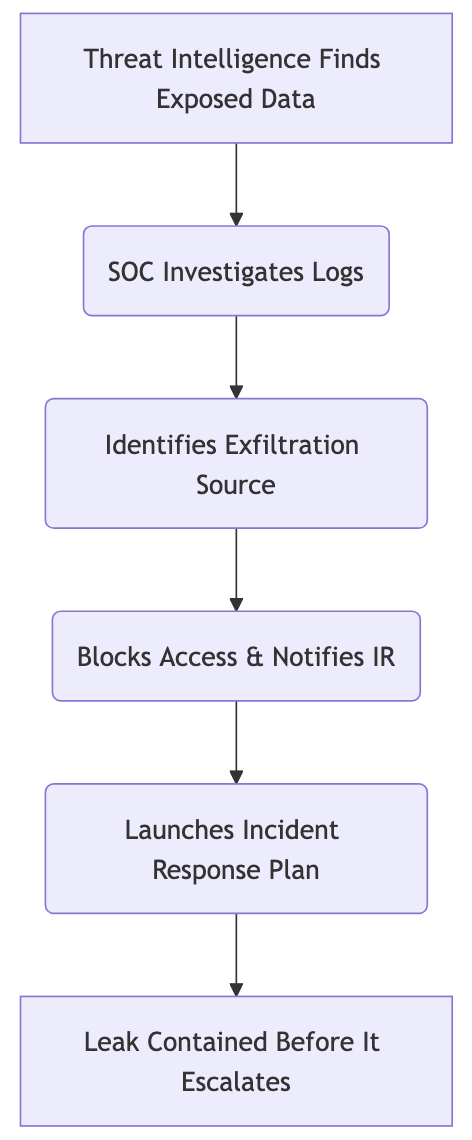
Use Case: SOC Detecting a Leak Before It Becomes a Crisis
A Leak-Proof Strategy more than just DLP
Most companies focus on preventing leaks (which is great), but not enough focus on detecting when a leak has already happened.
To stay ahead:
✔ Monitor external sources for leaked data.
✔ Collaborate between Threat Intelligence & SOC.
✔ Use behavioral analytics to detect unusual data movements.
✔ Act fast on compliance obligations to avoid legal trouble.
A proactive SOC team isn’t just a defender — it’s an early warning system that can stop leaks before they turn into disasters.
How Data leaks impact you personally
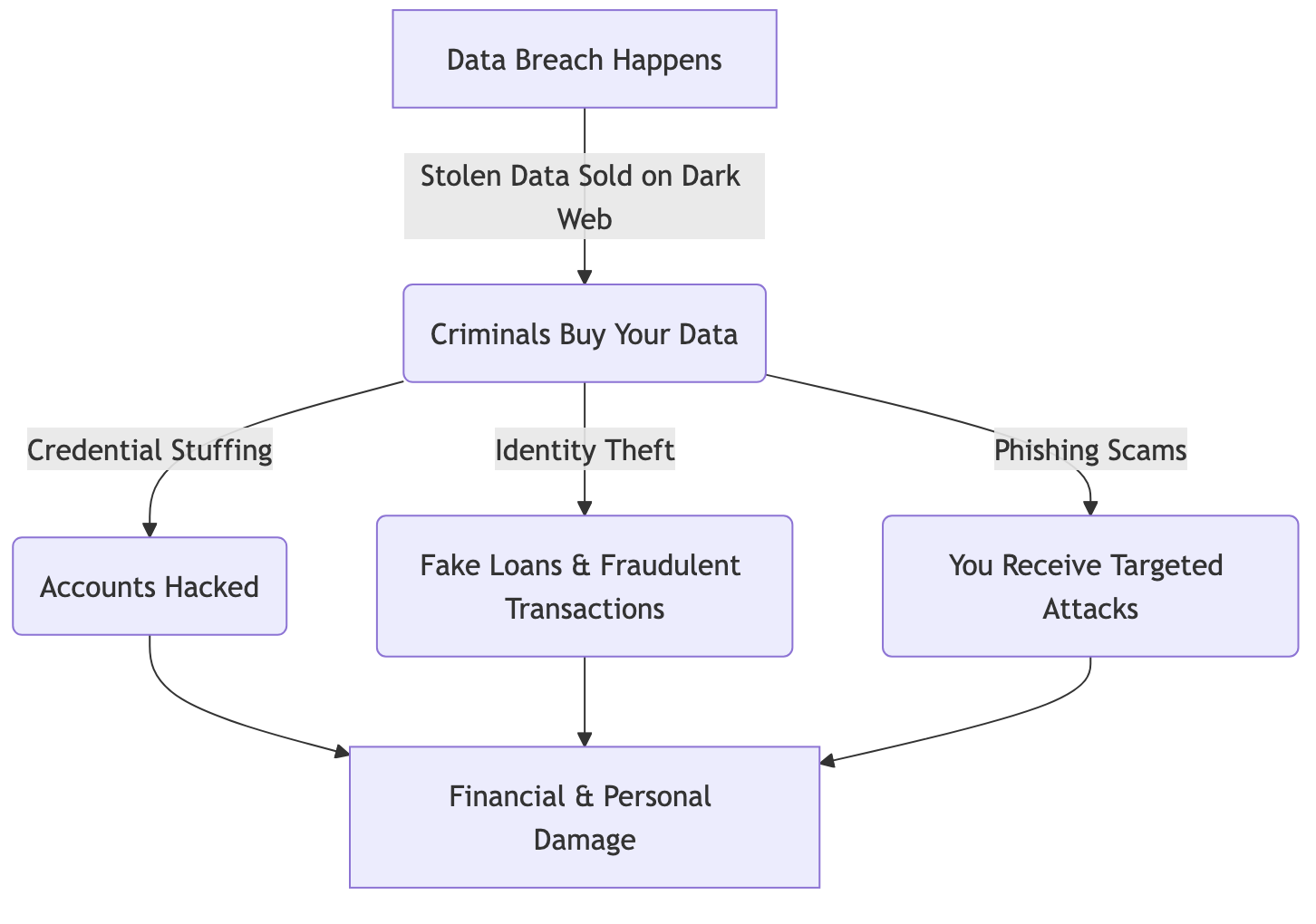
We’ve talked about how data leaks can damage businesses, but what about individuals? In reality, the biggest victims of data breaches are you and me — our personal information gets leaked, stolen, and sometimes even sold on the dark web.
What Happens When Your Data is Leaked?
A leaked email, password, or credit card number might seem minor, but here’s how cybercriminals exploit it:
| Leaked Information | How Cybercriminals Exploit It |
|---|
| Email & Passwords | Credential stuffing (hacking into other accounts where you use the same password) |
| Credit Card Details | Fraudulent transactions, identity theft |
| Phone Number | Phishing attacks, fake tech support scams |
| Personal ID (Driver’s License, Passport) | Identity fraud, fake loan applications |
| Medical Records | Insurance fraud, blackmail risks |
Real-World Example:
A simple leaked password could be used to hack your email account. Once inside, attackers reset passwords for your banking, social media, and shopping accounts. Within minutes, your identity could be stolen.
How to Check If Your Data is Leaked
Cyber-criminals don’t send you a notification when they steal your data. So how can you tell if your information is out there?
Quick Ways to Check:
✔ Use ‘Have I Been Pwned’ (https://haveibeenpwned.com/) – Check if your email or phone number was in a data breach.
✔ Monitor Your Accounts – Unusual logins? Emails about password resets you didn’t request? Red flags!
✔ Google Yourself – Sometimes leaked personal info shows up in public searches.
✔ Enable Dark Web Monitoring – Some services (like credit monitoring tools) alert you if your data appears on hacker sites.
How to Protect Yourself from Data Leaks
Cyber Hygiene Tips for Everyone
🛑 Use Strong, Unique Passwords — No more “123456” or “password.” Use a password manager!
🔒 Enable Multi-Factor Authentication (MFA) — Even if hackers get your password, they can’t log in without a second factor.
📵 Avoid Public Wi-Fi for Sensitive Transactions — Hackers love free coffee shop Wi-Fi.
🚫 Be Wary of Phishing Emails & Texts — If a message asks for personal details, don’t click — verify the source first.
🔍 Regularly Check Your Financial Statements — Small, strange charges? Could be a test-run for fraud.
🗑️ Shred Sensitive Documents — Dumpster diving is still a hacker trick.
What to Do If Your Data Has Been Leaked?
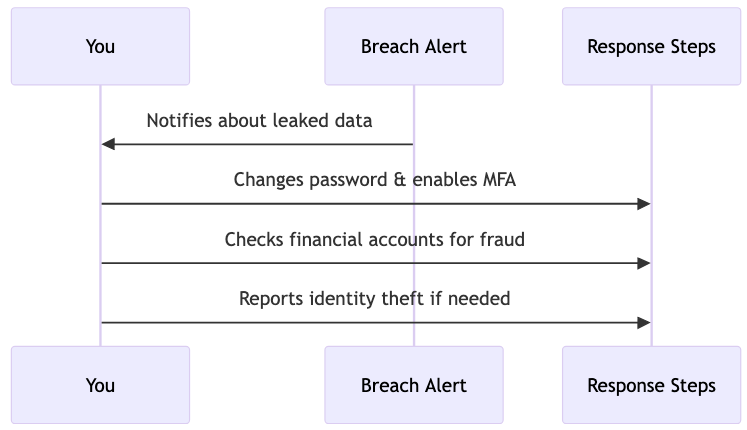
🚨 If your credentials or personal info is leaked, act fast:
✅ Change passwords immediately (especially if you reused it anywhere).
✅ Enable two-factor authentication to add an extra layer of security.
✅ Monitor your accounts for suspicious activity (banking, email, social media).
✅ Freeze your credit if you suspect identity theft.
✅ Report fraud to your bank, credit agency, or law enforcement if needed.
Final Thoughts: Data leaks aren’t just a corporate problem
Many people assume only companies need to worry about data leaks. But your personal data is a valuable target too. Taking proactive steps today can prevent financial loss, identity theft, and stress in the future.
So, ask yourself:
👉 When was the last time you checked if your data was exposed?
👉 Are you using the same password across multiple accounts?
👉 Do you have MFA enabled on critical accounts?
A few small changes in your online habits can go a long way in keeping your personal information safe!








 Thirdeye Intelligence
Leave a comment